Showing posts with label Hospitals Beyond Boundaries. Show all posts

Thursday, October 10, 2013

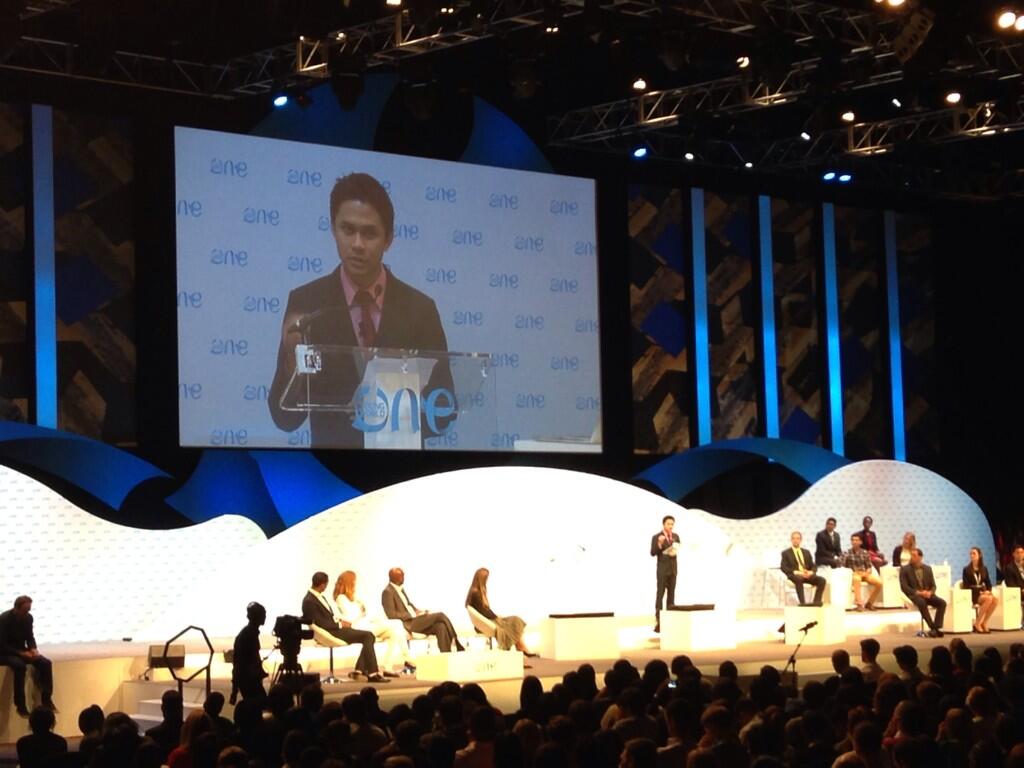
The One Young World Summit, Johannesburg

One Young World has been the most eye-opening event I have ever been to. So many young people are doing amazing things across the world. I feel so small with the project that I am doing. But the good thing about feeling what you are doing is small as compared to others is that it feels more achievable. If other young people can do greater things than me, so then what is my excuse? The moment I stepped off the stage, streams of people came and told me words of hope, to continue what I am doing. But the best words came from the Father of social business himself: Professor Muhammad Yunus, whom I got to talk to backstage. He told me things will be tough, but to never lose faith in what you believe in. My speech can be viewed below at 14:44 minutes:


Tuesday, August 20, 2013

Living The Moment

Many people asked me shouldn't I be a specialist first, learn hospital management, business and management or something to run Hospitals Beyond Boundaries? Oh well, if I spend all my time studying to be ready, I will never stop studying, and I will never start. A good idea evolves over a long time period. It is important to start while you are young and have the energy to execute. Many people are so afraid of making mistakes, they become paralyzed. But it is necessary to learn from mistakes. Contrary to learning theory from books, you can never forget the experience and pain of a mistake. There is no mistake you cannot recover from except if it kills you. I am doing something that I really care about, something I have passion in, something I love. For me, that is more worth it than a bunch of degrees and certificates hung on the wall. I've had some tough times convincing people about my idea, but then it occurred to me: If they don't like my idea, I never have to see these people again

Thursday, May 16, 2013

A Journey of Self Discovery

It has almost been 2 weeks since this journey began. From Phnom Penh going 150 miles north to Siem Reap and back again, this travel has opened my eyes to the harsh reality of living in a country still haunted by a recent tragic past that drives the country into extreme poverty. It has made me realize how absurd I was presenting about health care in resource stricken countries in air-conditioned conference rooms, when actually being here among the poor, going through the sweltering heat, thinking “how can these people live like this?” is an absolutely different thing. If my years spent living in Indonesia shapes my worldview of developing countries, Cambodia confirms this viewpoint. Yesterday we visited one of the best hospitals in Phnom Penh and I was still surprised to see a patient fresh off brain surgery put into a hot, dark room crammed with other patients. Being perfectly healthy, I could not maintain being there more than 5 minutes without being drenched in sweat. I can only imagine lying helplessly in pain or gasping for air when the air is already hard to breathe in. It reminded me of a patient back in Malaysia who demanded to change bed because the air conditioning is too strong. How we are blessed with choices when here, there is no such option.

My time in Phnom Penh was purposely devoid of living in hotels in order to immerse myself into the local culture. Living with the locals has allowed me to learn a bit of their language, eat their local dishes and live their daily activities. Each day is fully taken advantage of. Cooler mornings were spent writing or reading the numerous books written about Cambodia’s tragic history under the Khmer Rouge regime. Work starts near mid-day, where we would visit our proposed hospital site, visit the school which our collaborating NGO runs, go to our meetings, or scouting for a suitable site for our health screening project scheduled in a few months time. As young doctors, there seems so much for us to do, but so little resource we have. Sometimes we feel helpless compared to the gargantuan task of building a hospital in this resource stricken area and improving the health care of the community and their economy as a whole. However I kept holding on to a humorous quote I found: “Dream big, start small, but most important of all, start!”

The late Steve Jobs once said “The only way to do great work is to love what you do. If you haven’t found it yet, keep looking. Don’t settle. As with all matters of the heart, you will know when you find it”. I believe that I have found it through this journey. I set out to discover this so called ‘Kingdom of Wonder’, but it ended up as a journey of self-discovery. My days have never been happier doing all this work that I am doing now. It is very tiring, but when you love doing something, it is as if you did not go to work at all. All I wish is that this passion and excitement would not simmer down once I have started my housemanship training. Time and again I saw my friends lose their passion in the things they love to do, the things that really creates meaning, after beaten down by the harsh life of a young doctor. Things will not always be easy, but when everything seems to fall apart, I hope I will always remind myself of the worse hardship I see during this journey. When I do, everything else will pale in comparison.


Phnom Penh, 16 May 2013 

Thursday, January 31, 2013

Dreaming Big but Starting Small

So last month fellow HBBers were in Publika, Solaris Dutamas for inaugural Hope Awards. The event is actually a closing ceremony for the Youth Business Social Summit 2012, where awards are given to the best youth-led NGOs in Malaysia. The summit was officiated by someone who earns my upmost respect for receiving a Nobel Prize in Economics: Muhammad Yunus, the founder of Grameen Bank in Bangladesh. I had just read his book ‘A World Without Poverty’ and it gave me a lot of insights and ideas that could be applied to HBB. Anyway, several categories were contested that night and we were very lucky to be nominated for best NGO advocating civic actions and human rights, especially realizing ourselves as a very new NGO.

So the results came out, and turns out that we did not win. Being such a new organization, it was quite expected. However, we were disappointed nonetheless for missing the chance to win the award and RM8000 in cold hard cash that could really jump-start our organization. Disappointed, so we went looking for a nearby café where we can let off some steam. It was around 11 PM and most of the cafés are closed. We walked a bit far from the venue until we saw a café still lit open, even with Christmas lights on a Christmas tree still blinking (it was near Christmas at that time). As we got closer, we realized that some of the chairs had already been stacked together, signalling that it is almost time to close. We were about to pass by when a waiter said hello and invited us in. ‘Are you still open?’ I asked.

I had to do a 3 minutes 'elevator pitch' to promote the cause of our HBB. 3 minutes only!

The program booklet for the event
The café was called Coffee Societé, and it was only after we sat in that I realized I have read about this café before in Foursquare community. It has some good reviews and was rated quite well. Being a coffee connoisseur, I am excited to taste their well talked about coffee. It was said that even the Sultan of Kelantan came here for coffee and the Airasia CEO Tony Fernandes regularly come for his caffeine kicks. Then as we were about to order, bad news came in. Since it was already late, the espresso machine has been cleaned up with chemicals, so coffee is not available at that time. ‘What?!’ I thought. Already felt down by the results of the awards, I could not bare any more frustrations and went on to order hot chocolate, the closest I have to coffee.
The coffee bar decorated for Christmas that was coming
Then came in a young man from the back asking us ‘How was the drink?’. We told him that we actually wanted to taste their coffee. Then we went on to tell him that we’re from HBB and why we were there in Publika that night. We also told him about our project in Cambodia and our future plans. He was so excited to hear about us that he offered to reopen the coffee bar and serve us coffee! Although the espresso machine has been cleaned up with chemicals, he was willing to spoil it and clean it all over again just to serve us coffee. We were so happy, ordered the coffee purportedly to be the best in town, and went on to tell him about our exciting projects.

Coffee Societé's nice interiors

At last we had our coffee served with beautiful latté art!
Turns out the young man was actually the owner of the coffee shop. He tells us about his experience of having heart failure when he was young (we guessed it was a rheumatic heart disease) and had to stay in the hospital for weeks and there were moments where the doctor thought he might not survive. It reminds me of my own experience of being warded for 2 weeks and almost having to suffer vertigo for the rest of my life. Interesting is, we both made a promise to God that we would do something significant towards humanity if we went out of this hospital healthy. Different faith (he’s a Buddhist), but same promise. After a few doses of caffeine, our spirits were uplifted sky high. We thought about what will be of HBB in 10 years? So I put out a tissue paper, and wrote our ultimate target for HBB in 10 years. Here’s how it goes:
Our ultimate vision
The great thing about starting young is that there’s no telling where we’ll go in 10-20 years. We may not win an award that night, and although it was never our intention to win awards when starting this NGO, but who knows what award we’ll win in a few decades. A Nobel wouldn’t be too far-fetched when time is on your side, isn’t it? I think it is absolutely fine to have manic flight of ideas (especially after a few shots of caffeine), as long as we keep it within logical means and break it down into small, manageable steps. The rule is simple. If you want to go fast, you can go alone. But if you want to go far, go together. HBB is not about going somewhere fast. It is about going far to help those in need and connect with people who has the same purpose as ours. We think big, but we start small. In the end, all we want to do is answer life’s most persistent and urgent question: ‘What are we doing for others?’

Monday, October 15, 2012

HBB: Good People, Good Coffee, Doing Good

It has been a long time since I've updated anything about my NGO, Hospitals Beyond Boundaries (HBB) in this blog. Perhaps there are too many things to be updated about that I wish I could just direct all of you to our official website at www.hbb.org.my and read all about our projects and events. But despite having an official website, I still prefer writing things in a blog. It feels more personal, where I can share my thoughts freely.
Our website
5 months down the line after the official recognition of HBB as an NGO, we are finally getting things up and kicking. From 6 members as mentioned in my previous post (link), we have recruited 7 more members, making us a group of 13. We now have our own website, our own email domain (feel free to send an email to lutfi@hbb.org.my!), official name card and an official launching of the Cambodia project in UIA. We still don’t have our own office, and if you notice the address on the website is actually the address of my own house! Yes, we do meetings there, but we also do it everywhere. Last one we did it in one of the Coffee Planet chains, the previous meeting was at a Library in Shah Alam, and before that was at a café by the lake. I guess that’s the advantage of having organization made up of a bunch of young people. We are very flexible. I could call up for a meeting anytime, anywhere, and we will make each one a fun experience. These are a few of the great meetings I ever had, and for the first time in my life, I actually look forward to upcoming meetings. There were a lot of fun and laughter in our meetings, but when it was time to discuss important things, we get serious. Then we get something to eat, have lunch, dinner, whatever, and have fun again. The spark of creativity is so alive. We amended our constitution at a café over Caramel Cappuccinos and Red Velvet cakes. How laid back could that be? The best thing about all of this is that despite being all laid back, we know that we are doing something purposeful, something that might actually bring change to other people’s lives, far beyond the boundaries of our own country.
It takes caffeine for our creative spark. Lots of them!
I am just glad that I have found this group of people who has the same passion as I do. We came from different backgrounds and different field of study: medicine, accountancy, law, business and finance, and to be honest more than half of the people I recruited were merely strangers just 5 months back. I guess passion works like a magnet that brings us together despite our differences. Although being young gives us an advantage, it also gives mixed response from people about what we are doing. As more people get to know about our NGO, people start to ask questions. Like are we really going to build up a hospital? Do we have enough credibility and experience? The most reflective was from my research supervisor, who has a pHD in Public Health, who told me that setting up this kind of non-profit, non-governmental organization is definitely not an easy task. He knows, because he himself has been involved in many NGOs. But honestly, he said, it is great work, what we are doing. He did not do such things because his experience in NGOs showed how difficult it is to set up an NGO. We didn’t know. But we set up one anyway. I think that’s the beauty of not knowing. By not knowing the difficulties, we went on ahead, became a bit unreasonable and did it anyway. Yeah, sometimes not knowing can be good.
Meetings
But what definitely good is the feeling that we are doing something worthwhile. I guess everybody tries to squeeze in a few worthwhile things during the period between birth and death. The thing is we do not know how long this period will be since no one knows when their time will be up. I already felt like dying a year ago. Having a traumatic accident with damaged cochlear nerves and leaking out brain fluids that could risk brain infection already put me into a state of hopelessness. I lost my balance literally, unable to walk straight. I lost half of my hearing in the left ear and still have ringing in my ears right until this moment. Praise be to the Almighty, I survived. I could have just died of brain infection if it weren’t for the antibiotics running down my veins for 2 whole weeks. So if dying could come at any given moment, why not do something worthwhile at any given moment as well?
Post meeting
The beginning is always the hardest. While we are young and healthy, without many commitments to take care of children or family, it is the best time to be in the hardest part. If I were to wait until I have enough experience, I think I would not even start anything at all! With a family to take care of, office politics to think about, workload and all, I doubt I would take the leap to start a new NGO. For me the timing is perfect, and hopefully everything will unfold perfectly. Starting young allows you to start with the spirit of a beginner, unsure of everything, but confident enough to go on. In the words of the late Steve Jobs: Stay hungry, stay foolish. If we were to make a lot of mistakes during these young periods, well that is actually good. Because people learn from mistakes, and it seems a good idea to make all the possible mistakes when we are young, learn from it, and start doing everything right when we’re older ;)

P/s: It takes just one click to help us out, increase our visibility and send our message to more people. See the ‘Support my NGO’ badge on the right sidebar? Click ‘like’ if you haven’t done so and thank you for your support!

Sunday, June 10, 2012

Humble Beginnings

Since Hospitals Beyond Boundaries (HBB) is now an officially recognized NGO under the Societies Act 1966, it is time for some serious groundwork. Currently, we are a team of six: Me, Hannan, Aizuddin, Sarah, Asmah and Izza. We are a mix of people from the medical, accountancy and business field. Ustaz Kausar from Cambodia is here in Malaysia so last night so we met up with him at my house to discuss plans to start things off. We have decided that our first project would be to build a hospital for the Muslim community in Phnom Penh.
  
Why Phnom Penh?
Initially the plan was to build a hospital in the remote areas of Cambodia, especially the Muslim villages of Kampong Cham and Kampong Chnnang. However, we have discussed that since this is our first project, it should be fairly achievable in a few years. As they say, ‘dream big, but start small’. My father had a friend who was trying to build a hospital in the rural areas of Sri Lanka, but his project was halted for years because of problems with biological waste disposal. Due to its remote location, there are no proper sites to dispose their wastes, and the transportation to the city where the incinerators are located is difficult. In the end they had to build their own incinerator to destroy the wastes, which delays the project further.

By building a hospital near the city of Phnom Penh, problems such as transportation and waste disposal should be readily taken care of because the city already has many hospitals, which means they must have proper system of waste disposal. The long term plan is to make this one in Phnom Penh a start and a learning curve to the management of hospitals in Cambodia. If things go really well and we are ready to extend into the more rural areas, the one here in Phnom Penh would be the centre of operations.

Why a hospital for the Muslim community?
The Muslim community is a minority and in Phnom Penh they mainly reside in the area called KM 7, KM 8 and KM 9. There already many hospitals in Phnom Penh but other than the government, they are run by the French, the Koreans and the Christian missionaries. The demands for a hospital built or managed by a Muslims is very high because of the problems they faced as stated in my previous post (link). Ustaz Kausar also has already established a network of kindergarten, primary and high schools in that area. Hence, at least they have the knowledge of how business works in that area. In terms of management, there are many Muslims around that area that are of the working class. Hence, finding human resources for the management and sustainability of the hospital should be easy.

Today I am going to meet up with 2 other potential members in Shah Alam to join me in this endeavour. We are still working out a website for our organization, so in the meantime, keep updated through my blog! ;)

Discussing some paperwork

Tuesday, May 22, 2012

HBB Is Now An Officially Registered NGO!

It has been more than a week since holiday ended, and my brain is finally starting to function again after months of intermittent idleness. I feel very happy today that all the efforts that I have done in between those intermittent idleness, where I spent writing proposals and preparing documents to set up the NGO Hospitals Beyond Boundaries (HBB) has finally paid off. I received an email notifying me that HBB is now an officially registered NGO under the Registrar of Societies, Ministry of Home Affairs Malaysia: 

  This could be a start of something really purposeful!

Monday, May 7, 2012

Turbulent Times

The past couple of weeks had been a turbulent period in my personal life. It was in shambles. I thought I’ve been through much worse situations, but there are always unfortunate events happening now and then to get me feeling low. To top it all off, last weekend I had a car accident where I smashed a car in front of me while driving my grandparents and sister. It gave a huge shock to me, and I was lucky that nobody was hurt in that incident. I thought ‘I cannot go on like this’, life can seem unfair, it can arbitrarily cut off our air, but that is a fact of life, and everything does happen for a reason. So I should just go on with it. Forget personal tragedies, I have to get back to doing things that brings meaning to my life. There is no use thinking about things that I cannot have and risk losing things I already have and cherish in life.

So life goes on. Last weekend I presented to my extended family members about the hospital project in Cambodia. We have agreed to register the NGO ‘Hospitals Beyond Boundaries’ to the Malaysian Registrar of Societies (ROS). We now have our own constitution. I cannot wait to get it registered so at last I can recruit people, open a bank account, raise funds and start writing a formal proposal. Thank you to those who had already shown interest to donate and contribute. I will let you know as soon as the NGO is established and the accounts are open. Meanwhile, in Cambodia, due to a few circumstances the land that has been proposed to be hospital site has been changed. We are moving to a much larger land, almost double the size of land previously proposed. But that also means higher costs. This is the last week of my nearly 2 month holiday. I hope I can get everything settled before class starts again.


Friday, April 27, 2012

Proposal To Set Up The NGO Hospitals Beyond Boundaries

I am currently working on the proposal to set up an NGO I decided to name Hospitals Beyond Boundaries (HBB). This is part of the proposal that should give a brief description of what we aim to do. However, our main goal for now is to raise funds to build the hospital in Cambodia. The first meeting with the 'Board of Advisers' (which consists of family members for now) will be this weekend. Wish me luck!

The Proposed Logo for Hospitals Beyond Boundaries (HBB). H in the center sandwiched by two Bs, one of them mirrored, forming a shape of a butterfly.

Introduction
 
Hospitals Beyond Boundaries (HBB)’s mission is to help build hospitals in impoverished places and develop the surrounding community through sustainable health care services, financial aid and community development efforts. The hospitals that HBB envision to build are those that understand the local community and are able to develop them in ways that they can sustain health care efforts independently. Health is a basic human need. We believe that curing diseases also helps alleviate poverty. By providing hospitals in health care deprived communities, HBB hopes that it will serve as a stimulus for further efforts in improving not only the community’s health standards, but also the standards of living in general. HBB believes that an effective and sustainable healthcare can only be achieved with a strong understanding of the interaction between healthcare and the local culture, religion, social systems and economy. To achieve this, HBB strives to involve the local community as much as possible in building and the running of our hospitals.

Significance


Sustainable health care efforts
The need for an NGO that helps build hospitals in impoverished places arise with the realization that while many humanitarian missions are available, not many of those include ‘community development’ in their agenda. Most humanitarian mission responds to war, crisis, famine or disaster, but efforts in building back the society after these periods of turbulence are usually minimal or absent. Although some community do have hospitals, they are usually government-run and by standards of developing countries, lack many facilities, medications and face many impediments such as limited resources, limited workforce, poor health system and bureaucratic delays. By helping to build a private community-run hospital, more tolerant control of supplies, workforce and collaborations with other parties such as NGOs or donors are made possible. However, we also realize that while we provide a different approach in health care, the highest level of effectiveness can only be achieved establishing interaction with the national health system. Hence, HBB would strive to strengthen and complement the existing health care system in any countries we are in.

Empowering the community

The goal of HBB is to empower the community to take charge of their own healthcare. Because the health care workforce is usually scarce in developing countries, most government do not impose laws that prohibit non-medical personnel to become healthcare workers. The main function of these community health care workers would be to educate the community on health, refer patients to the hospital, and for those who could not come to the hospital, they will come to them. The community health care workers do not take over the work of doctors or nurses. As members of their own community, they serve as an important bridge that builds trust and links the hospital to the community. Transportation costs, cultural and religious beliefs, social stigma, discrimination and lack of information are examples of why the poor do not seek treatment. By involving the local community in the treatment of patients, these barriers would be addressed because they best understand the barriers to health faced by the local community.

Stimulating the local economy

Many missionary hospitals depend on the workforce of volunteers. However being labelled ‘volunteers’ would deny them from receiving any form of payments. We feel that although volunteering for the poor is a noble act that should demand no incentives, we also feel that it is right to pay health care workers for their hard service in taking care of patients and putting their lives at risk of contracting infectious diseases, just like any other health care workers in developed countries. The rationales behind paying the community healthcare workers are: 1) it would create paying jobs for the community and ultimately boosts the local economy. 2) With payments and increments based on time or performance, it reduces workforce turnover and the costs of finding replacements. 3) By releasing their minds of financial worries to take care of their family, they could focus on their work and perform their jobs at their best.

Tailor-made health care

Every community has its own health care difficulties. No one type of health care fits all. Diseases that are commonly treatable for the privileged may be lethal to the poor. Diseases that are relatively rare in developed countries are relatively common in the developing, for obvious reasons. By focusing health care on each specific community, we are able to recognize common disease patterns, create a system that addresses these diseases, and respond to those in need of urgent attention. By being a privately run community hospital, a more flexible and responsive management is possible where we tailor ourselves to current healthcare needs of the community.

Research opportunities

Our hospitals could be a platform for doing research, whether clinical or epidemiologic studies. As in any other hospitals, collection of all patients’ data is essential. These data, combined with the experiences and findings could be used as research resources. We would like to facilitate affiliations with leading Malaysian Universities and researchers interested to do research in our hospital areas. This is especially rewarding for them since rural areas in South-East Asia are considered an untapped source for research. Scholarly articles, papers and other findings could be published and presented at international academic and scientific conferences and meeting to both to expand the global knowledge of rural health and to further promote our cause. 


Wednesday, April 18, 2012

Keperluan Sebuah Hospital Untuk Komuniti Islam Cham Di Kemboja

Seperti mana yang telah diberitahu pada entri saya yang lepas, saya bersama ibu dan bapa saya telah ke Kemboja pada hujung minggu yang lalu untuk melihat tapak cadangan pembinaan hospital di daerah Kampong Cham, Kemboja. Idea ini tercetus setelah seorang daripada warga Kemboja yang pernah menetap di Malaysia dan sangat fasih berbahasa Melayu, Ustaz Kauthar, dijemput ke rumah saya untuk menceritakan tentang keadaan sebenar orang Islam di Kemboja dari perspektif warga Islam Kemboja sendiri. Secara keseluruhannya, dia menyatakan terdapat banyak pertubuhan-pertubuhan NGO dari Malaysia yang telah melakukan bantuan amal untuk orang Islam di sana, termasuk memberi bantuan makanan, membina masjid, sekolah dan perpustakaan. Namun begitu, mereka masih menghadapi masalah yang besar yang sehingga kini masih belum dapat diselesaikan, iaitu mendapatkan rawatan perubatan dan kesihatan yang berterusan. Sesuatu yang benar-benar diperlukan oleh masyarakat di sana pada saat ini adalah sebuah hospital. Sebelum saya bercerita lebih lanjut tentang cadangan pembinaan hospital itu sendiri, eloklah jika saya memperkenalkan dahulu tentang komuniti Islam di Kemboja agar tujuan pembinaan hospital ini menjadi lebih jelas.

Di hadapan pejabat Al-Ihsan, sebuah pertubuhan yang diasaskan pada tahun 2001 oleh Ustaz Math Sales (berbaju dan berkopiah putih) dan bahagian pemudanya diketuai oleh anaknya, Ustaz Kauthar (memakai t-shirt biru berserta kopiah putih).
Boleh dikatakan keseluruhan orang Islam di Kemboja adalah dari keturunan Cham. Ada juga di kalangan mereka yang dari keturunan Jawa dan Khmer, namun kebanyakan mereka tinggal dan diserap di dalam komuniti Cham sehingga perbezaan keturunan ini semakin kabur. Komuniti Cham berasal dari kerajaan Champa, sebuah kerajaan maritim yang sangat masyur pada sekitar kurun ke-7 sehingga kejatuhannya pada tahun 1832. Kerajaan ini berpusat di kawasan yang kini letaknya Vietnam selatan. Seperti kebanyakan kerajaan-kerajaan lama yang wujud sekitar kurun ke-7, kerajaan Champa yang asalnya menganut agama Hindu-Buddha telah menjadi kerajaan Islam setelah pengislaman kerabat raja-rajanya oleh pedagang-pedangang Arab, India dan Melaka. Pada tahun 1471, kerajaan Vietnam semakin kuat dan berpengaruh dah akhirnya menghapuskan pusat kerajaan Cham utara, Vijaya. Setelah itu pada tahun 1832, saki-baki kerajaan Cham lain telah dihapuskan sama sekali. Pada selang waktu kejatuhan kerajaan Champa ke tangan Vietnam ini, kebanyakan orang Champa berhijrah ke tempat lain, dan kebanyakan akhirnya menetap di Kemboja. Ada juga yang ke Thailand dan Malaysia, terutama di Kelantan dan Terengganu, dan nada juga yang masih tinggal di Vietnam.

Daerah Kampong Cham

Kini, kawasan yang diduduki oleh orang Cham inilah yang dikenali sebagai daerah Kampong Cham. Kali pertama saya mendengar tentang Kampong Cham, saya terpedaya dengan nama ‘kampong’ di hadapannnya dengan menyangkakan ianya sebuah kampung kecil. Namun, Kampong Cham merupakan daerah yang besar, malah merupakan daerah ketiga terbesar di seluruh Kemboja dengan anggaran jumlah penduduk sebanyak 63,771 orang! Pusat daerah yang dikenali dgn nama yang sama, ‘Kampong Cham’, terletak 124 kilometer dari bandar Phnom Penh. Di dalam daerah ini, dianggarkan terdapat lebih 70 kampung-kampung kecil. Orang Cham bertutur dalam bahasa Cham. Saya memperhatikan bahawa bahasa Cham kedengaran lebih mirip dengan bahasa Melayu berbanding bahasa Khmer yang merupakan bahasa rasmi Kemboja. Saya diberitahu bahawa terdapat banyak perkataan Cham yang sama dengan bahasa Melayu. Oleh itu, orang Cham sangat mudah mempelajari bahasa Melayu. Terdapat juga orang Cham yang boleh bertutur fasih dalam Bahasa Melayu kerana pernah menuntut atau tinggal di Malaysia untuk jangka masa yang lama. Yang menariknya, ada juga antara mereka yang fasih bertutur bahasa Melayu dalam loghat Kedah, Kelantan atau Terengganu! Orang Cham mengamalkan ajaran Islam Sunni dan menganut mazhab Shafie’. Mereka menjalankan kesemua rukun Islam: mengucap dua kalimah syahadah, menunaikan solat fardu lima waktu, berpuasa pada bulan Ramadan, membayar zakat dan mengerjakan Haji di Mekah bagi mereka yang mampu. Shamsuddin Al-Ansari, seorang pakar geografi arab pada tahun 1325 mengatakan bahawa Islam datang ke Champa sejak zaman khalifah Usman dan Ali lagi. Pada hari ini, kebanyakan daripada orang Cham tinggal di kampung dan hidup dalam kemiskinan, maka tidak ramai yang mampu membayar zakat dan menunaikan haji. Kebayakan mereka yang di kampung bekerja sebagai petani dan nelayan, manakala mereka yang lebih dekat dengan kawasan bandar bekerja sebagai peniaga runcit dan restoran.
Orang Cham menunaikan yang solat di Masjid
Orang Cham merupakan puak minoriti di Kemboja. Statistik dari Kerajaan Kemboja menanggarkan hanya sebanyak 4% penduduk Kemboja adalah orang Cham. Namun anggaran dengan julat perbezaan yang sangat besar ini mungkin juga tidak tepat kerana ketiadaan system bancian yang sistematik dilakukan oleh kerajaan Kemboja. Tambahan pula, kebanyakan orang Cham tinggal di pedalaman, menyukarkan proses bancian. Kadar kelahiran orang Cham juga semakin bertambah manakala kadar kelahiran daripada penduduk Kemboja lainnya semakin berkurang, menjadikan peratusan populasi mereka semakin bertambah dari hari ke hari. Anehnya, dengan jumlah penduduk Islam yang begitu ramai (500,000 – 700,000 orang), tiada satu pun klinik atau hospital yang didirikan atau dikendalikan oleh doktor Islam. Faktor utama adalah kekurangan doktor Islam di negara mereka sendiri, yang juga diakibatkan oleh kurangnya peluang pembelajaran untuk anak-anak Cham yang hidup dalam kemiskinan.

Kebanyakan orang Cham menyara diri dengan menangkap ikan di Tasik Tonle Sap (photo courtesy of Nigel Dickinson)
Di sini saya akan mula membicarakan apa perlunya sebuah hospital di daerah Kampong Cham. Dari segi geografi, mereka yang menetap di kampung-kampung pedalaman harus berjalan jauh untuk mendapatkan rawatan di bandar Phnom Penh. Dari kawasan kampung, ia mengambil masa paling kurang 2 jam, dan dari kampung yang terletak di kawasan pedalaman, ianya boleh mengambil masa lebih 5 jam. Kerana kos yang mahal untuk perjalanan ini, kebanyakan mereka pada akhirnya tidak mencari rawatan untuk penyakit-penyakit yang mereka hadapi. Bagi yang mampu pula, mereka terpaksa berhadapan dengan karenah birokrasi dan diskriminasi oleh pengendali di hospital kerajaan yang kebanyakannya tidak memahami Islam dan memandang rendah terhadap orang Islam Cham. Melalui beberapa temu ramah saya terhadap orang di sana, mereka menceritakan kisah-kisah pahit ketika mendapatkan rawatan. Kebanyakan mereka dilayan dengan kasar hanya kerana memakai tudung atau hijab. Keadaan ini menjadi serius sehinggakan kebanyakan mereka terpaksa membuka hijab ketika berada di kawasan hospital bagi mengelakkan layanan buruk dan diskriminasi pihak hospital. Masalah yang lebih besar timbul apabila adanya ibu yang hendak bersalin. Kerana ketidakfahaman kebanyakan orang di Kemboja terhadap Islam, maruah pesakit, terutama ketika bersalin tidak begitu dititik-beratkan. Suatu kisah sedih yang dikongsikan oleh seorang penduduk di sana adalah pada suatu ketika, seorang ibu yang bersalin bukan sahaja dijaga dan bayinya disambut oleh doktor lelaki (ini masih boleh diterima), namun turut diperhatikan oleh 10 orang doktor pelatih di dalam bilik bersalin tersebut yang kesemuanya lelaki! Memanglah keadaan ini dikira sebagai darurat, dan mungkin memang niat kesemua doktor pelatih tersebut hanyalah untuk belajar, namun alangkah baiknya sekiranya ibu yang bersalin mempunyai pilihan untuk mendapatkan rawatan dan bersalin di sebuah hospital yang menitik beratkan adab di dalam Islam selain juga menitik beratkan pengajaran.

Ibu saya (paling kiri) bersama kaum hawa Kampong Cham
Keperluan untuk sebuah hospital juga timbul dengan bertambah jumlah dan saratnya penyakit yang dihadapi oleh kanak-kanak. Hasil temuramah saya mendapati kebanyakan anak-anak menghidapi penyakit saluran permakanan, penyakit kulit, kekurangan nutrisi dan penyakit berjangkit. Penyakit berjangkitan seperti jangkitan cacing pernah diberi perhatian oleh sebuah pertubuhan NGO di Malaysia di mana mereka membekalkan ubat-ubat cacing kepada kanak-kanak di sana. Namun, seperti juga bantuan kemanusiaan lain, kelangsungan dan keberterusan usaha-usaha ini amat sukar dengan tiadanya pertubuhan tetap yang mengendalikan usaha-usaha ini yang berpangkalan di Kemboja. Oleh itu, kebanyakan usaha-usaha ini hanya dilakukan paling banyak setahun sekali sedangkan pesakit memerlukan ‘follow-up’ atau perhatian perubatan yang berterusan.

Ustaz Kauthar menunjukkan tanah yang dicadangkan menjadi tapak penubuhan hospital
Terdapat juga beberapa lagi kisah yang mungkin saya akan kongsikan di entri-entri akan datang. Saya berharap agar idea dan usaha untuk membina sebuah hospital di sana akan menjadi kenyataan pada suatu hari nanti. Saya sedar bahawa usaha ini amat sukar dan mungkin memakan masa bertahun-tahun melihat kepada proses penubuhan hospital di Malaysia sendiri. Namun begitu, saya berharap segala usaha ini tidak akan menjadi sia-sia. Sebagai permulaan, saya akan berusaha untuk menubuhkan sebuah badan NGO yang berperanan memantau, mengendali dan mengutip derma untuk tujuan pembinaan hospital. Saya juga memerlukan bantuan orang ramai untuk menyebarkan maklumat tentang komuniti Islam di sana dan juga tentang pembinaan hospital ini. Diharap semua usaha ini diberkati oleh Allah SWT, insyaAllah. 

Thursday, April 12, 2012

My New Endeavour in Cambodia

Most of my bizarre ideas are like the finest of coffees. Both of them are brewed in cafes, and before that final process, it takes a lot of time to cultivate, process, grinded, tamped upon and put under pressure. As I was having my usual morning caffeine kick at a small sidewalk café in India, a flash of idea brewed upon me. It started by asking myself ‘how did I get here?’ followed by ‘what does this journey, that I have trotted so far for, means to me?’ The journey I thought of was not of my trip to get there in India. No, not that. I was thinking about the journey of my life, is this all to it?

I was in Mumbai for an International Workshop on Healthcare and Medical Education, so days before I had to listen to hours and hours of lecture on the Indian healthcare system by one of India’s prominent public health specialist. She explained about all the good side and also the lacunas in the country’s healthcare system. I have always been interested in the healthcare system everywhere I go to (I ended up learning more about the National Health Service, NHS in the UK when I am supposed to learn ENT there). Then we went to the slums area. The situation there is beyond words, the people were poor, living in small, dark spaces, some of them downright unhygienic. The words of the public health specialist kept resounding in my head: ‘’we are good on policies but rarely on implementation’’. Then I remembered these words from the Holy Quran:
O you who believe! Why do you say that which you do not do? It is most hateful to Allah that you should say that which you do not do. Surely Allah loves those who fight in His way in ranks as if they were a firm and compact wall (Quran, Ash Shaff [61]: 2-4)
I began to think about myself. Traveling the world, seeing new places, experiencing bizarre things, winning awards and speaking in public might seem fulfilling to me. But is that all to it? I can write pages and pages and speak for hours and hours on suggestions of policies that could improve the health care of those who are most deprived of, but is writing and talking all that I can do? What can I do to walk all my talk?

I have been thinking about that a lot lately.

A few months ago, a Muslim Cambodian was invited to our house to give an overview of the situation of the Muslim community there in Cambodia. The situation there is that while many missionaries from Malaysia were there to build schools, provide shelter and food, they still lack health care services. It felt like a calling to me to see what I can do. My father sparked the idea of building a charitable hospital there. However, he has his own new endeavour of setting up a medical school that he has less time to work on that idea. It came to me that maybe I can take over the project. That idea was cultivated, processed, grinded, tamped upon and put under pressure in my mind until the time in that café in Mumbai where I have decided that with guidance from the words of the Almighthy as stated in Ash Shaff [61]: 2-4, I will start this new endeavour. Health care is my specialty, I have the knowledge, and this is the time for me to put it to good use, ‘to fight in Allah’s way in ranks as if I am a firm and compact wall’. I am going to start saving the world by helping the most destitute people. I am going to start with Cambodia. This weekend, I will be going to Cambodia with my parents to visit the community there, assess the situation and start planning something. This is going to be a long endeavour. It might take months or years to see results, but I will strive to be persistent in this.

I might be young, I might be naïve, I might not have a clue of what lies ahead. But mainly what makes a weakness might also makes a strength, as how a strong sword can also be tempered into a strong shield. By not knowing what lies ahead, it keeps me going on to discover and keep challenging myself and asking ‘’what happens next?’’. For now, what happens next is that I am going to Cambodia, keep on writing and speaking about the situation there to raise funds, and set up something that could sustain the efforts physically and financially. Obviously, I cannot do this alone. I will need help from other people: friends, family and colleagues. It might not seem clear yet what sort of organization or foundation I am going to form, but I sure will know when I get back from Cambodia this weekend. Pray that Allah be with me. 


Popular Posts