Monday, December 17, 2012

The Story of Autism: Part II

I am currently in Family Medicine posting where we are taught to emphasize on the psychosocial aspects of medicine. It means looking at a patient beyond the disease itself, treating humans and not just the disease. One of the important aspects to consider in psychosocial is finance. It reminds me of my previous post ‘The Story of Autism’. A few days ago, I have been introduced to an autism consultancy firm, simply called ‘Autism Consultancy’. The founder, Ms Charlene Samuel happens to read my post about autism and we came in contact through email. She informed me that autism is considered a ‘rich man’s disease’ not because the disease preselect among the rich like diabetes or hypertension, but because only the rich could afford the expensive fees charged for autism therapy.

I was saddened to know that most children go untreated once diagnosed simply because treatment is just too expensive. Although there are national centres for autism, sometimes there are just too many admissions in a year that they had to select the ones who really could not afford treatment. However, those who deemed that they could afford private therapy, doesn’t mean that they are rich. Can you imagine, the best centres in Malaysia can charge anything from RM 6,000 to RM10, 000 a month? As I have stated in ‘The Story of Autism’, these kids deserve to lead a normal life and early intervention is the most crucial part. Hence, Ms Charlene told me that her firm is targeting families that are not able to afford the expensive therapy fees that most centres demand. They strive to keep costs that an average Malaysian family can afford without compromising the quality of therapy, training and programming.

An interesting thing about the firm is that it empowers parents to teach and nurture their child, so that they would not be fully dependent on the therapists to teach and communicate with their child. I am just sharing this information for those who has a child with autism and looking for an affordable private autism consultancy firm, because I do believe that every child deserves to live a normal life and hence for those affected with autism, therapy should be accessible no matter what their financial background is. For more information, you can visit www.projecthope4autism.com, or you can even directly contact her at +012 2852007, or through email at charlenemariesa@gmail.com.

Autism Consultancy official website

Sunday, December 16, 2012

Being Human Beings

In the beginning, the Almighty created the heavens and earth. Then he sent humans down to earth and puts our souls into our bodies which represent ourselves in this physical world.

Encased safely in the dark space of our skull He created 3 pounds of mushy white and gray matter we refer to the brain. It receives every stimulus from this physical world, interprets them, and enables us to understand this world that He has created. He also bestows our brains with the ability to imagine things. With persistence, anything that our brain can imagine is able to be done the real world. With the ability to think, unlike animals, he blessed humans with the ability to change a part of this world He created. By commanding our body to respond to the stimulus from the physical world, we change it in some way or another.

The brain functions best when it feels excitement, joy and happiness through love, giving and gratitude towards Him, and then to other human beings: our family, our friends, and our community. When our brains functions at its best, the world changes harmoniously with our thoughts and action.

But sometimes, He sent down stimulus from the outside world that hampers our brains from performing the best functions. These are tests from Him. They come in the form of words or physical harm from others. Physical harm can hurt us, break our bones, but as long as it doesn't cause death or damage our brain, the best of us will heal in time and get back to changing a part of the world. It is true that ‘what doesn’t kill us makes us stronger’.

Harsh words, on the other hand, has the potential to damage our brain, but since these words only enters our brain in form of impulses, we have the ability to interpret, understand and react to them in our own choice. We can choose the best way to interpret things that does least harm by taking those words positively, and react in a way that maintains the brain's ability to think rationally and still perform its function to imagine and do things that change the world. Whatever happens outside in the physical world, as long as it doesn't damage the brain, nothing can stop us from changing the world, or a part of it.

As long as we are capable to do things, to imagine, to love, laugh, give and be thankful, nothing can harm us without our consent. After all, our body is only our physical representation in this world and therefore it is temporary. In the end, we leave this physical body of ours when the brain ceases to function. Our soul returns to lie with Him, and this world does not matter anymore. So think of it, there really is nothing to lose if we try.

Monday, October 15, 2012

HBB: Good People, Good Coffee, Doing Good

It has been a long time since I've updated anything about my NGO, Hospitals Beyond Boundaries (HBB) in this blog. Perhaps there are too many things to be updated about that I wish I could just direct all of you to our official website at www.hbb.org.my and read all about our projects and events. But despite having an official website, I still prefer writing things in a blog. It feels more personal, where I can share my thoughts freely.
Our website
5 months down the line after the official recognition of HBB as an NGO, we are finally getting things up and kicking. From 6 members as mentioned in my previous post (link), we have recruited 7 more members, making us a group of 13. We now have our own website, our own email domain (feel free to send an email to lutfi@hbb.org.my!), official name card and an official launching of the Cambodia project in UIA. We still don’t have our own office, and if you notice the address on the website is actually the address of my own house! Yes, we do meetings there, but we also do it everywhere. Last one we did it in one of the Coffee Planet chains, the previous meeting was at a Library in Shah Alam, and before that was at a café by the lake. I guess that’s the advantage of having organization made up of a bunch of young people. We are very flexible. I could call up for a meeting anytime, anywhere, and we will make each one a fun experience. These are a few of the great meetings I ever had, and for the first time in my life, I actually look forward to upcoming meetings. There were a lot of fun and laughter in our meetings, but when it was time to discuss important things, we get serious. Then we get something to eat, have lunch, dinner, whatever, and have fun again. The spark of creativity is so alive. We amended our constitution at a café over Caramel Cappuccinos and Red Velvet cakes. How laid back could that be? The best thing about all of this is that despite being all laid back, we know that we are doing something purposeful, something that might actually bring change to other people’s lives, far beyond the boundaries of our own country.
It takes caffeine for our creative spark. Lots of them!
I am just glad that I have found this group of people who has the same passion as I do. We came from different backgrounds and different field of study: medicine, accountancy, law, business and finance, and to be honest more than half of the people I recruited were merely strangers just 5 months back. I guess passion works like a magnet that brings us together despite our differences. Although being young gives us an advantage, it also gives mixed response from people about what we are doing. As more people get to know about our NGO, people start to ask questions. Like are we really going to build up a hospital? Do we have enough credibility and experience? The most reflective was from my research supervisor, who has a pHD in Public Health, who told me that setting up this kind of non-profit, non-governmental organization is definitely not an easy task. He knows, because he himself has been involved in many NGOs. But honestly, he said, it is great work, what we are doing. He did not do such things because his experience in NGOs showed how difficult it is to set up an NGO. We didn’t know. But we set up one anyway. I think that’s the beauty of not knowing. By not knowing the difficulties, we went on ahead, became a bit unreasonable and did it anyway. Yeah, sometimes not knowing can be good.
Meetings
But what definitely good is the feeling that we are doing something worthwhile. I guess everybody tries to squeeze in a few worthwhile things during the period between birth and death. The thing is we do not know how long this period will be since no one knows when their time will be up. I already felt like dying a year ago. Having a traumatic accident with damaged cochlear nerves and leaking out brain fluids that could risk brain infection already put me into a state of hopelessness. I lost my balance literally, unable to walk straight. I lost half of my hearing in the left ear and still have ringing in my ears right until this moment. Praise be to the Almighty, I survived. I could have just died of brain infection if it weren’t for the antibiotics running down my veins for 2 whole weeks. So if dying could come at any given moment, why not do something worthwhile at any given moment as well?
Post meeting
The beginning is always the hardest. While we are young and healthy, without many commitments to take care of children or family, it is the best time to be in the hardest part. If I were to wait until I have enough experience, I think I would not even start anything at all! With a family to take care of, office politics to think about, workload and all, I doubt I would take the leap to start a new NGO. For me the timing is perfect, and hopefully everything will unfold perfectly. Starting young allows you to start with the spirit of a beginner, unsure of everything, but confident enough to go on. In the words of the late Steve Jobs: Stay hungry, stay foolish. If we were to make a lot of mistakes during these young periods, well that is actually good. Because people learn from mistakes, and it seems a good idea to make all the possible mistakes when we are young, learn from it, and start doing everything right when we’re older ;)

P/s: It takes just one click to help us out, increase our visibility and send our message to more people. See the ‘Support my NGO’ badge on the right sidebar? Click ‘like’ if you haven’t done so and thank you for your support!

Friday, September 21, 2012

How I Fell in Love with My Passion: International Health

I guess every medical student has an idea of what kind of doctor they want to be. Common early ambitions include being a neurologist, a heart surgeon, pediatrician and all other high paying specialties. The type of doctor I want to be was different from others, shaped early on in medical school. It was inspired by a speech, precipitated by a chain of events and consolidated by fateful acquaintances.

The speech that changed the trajectory of my life was the one given by the president of World Bank, though he was not yet the President back then. His name was Jim Yong Kim. The event at that time was the 2009 Harvard Model United Nations. I was a first year medical student. Sitting at the back, I usually fall asleep during speeches or lectures, but somehow I stayed awake during his speech. Mr Jim Yong Kim opened my eyes, literally and metaphorically. It was amazing that after his speech, I never look at medicine the same way again. I begin to look at medicine beyond the four walls of the hospital. Ever since then, the hospital is no longer my world, for the world became my hospital. There at Harvard Model United Nations, I was selected to be the Indonesian representative (though I am a Malaysian) to the World Health Organization (WHO) committee. I had to learn all about the Indonesian healthcare system and all its policies. That's how my interest caught up in healthcare policies and healthcare economics.
Jim Yong Kim's speech during the opening ceremony of HNMUN 2009. This is where it all started
Ever since that event in Harvard University, I believe I have found my life's true calling. I have always been interested in politics, international relations, economics and sociology. But one thing for sure is that I do love medicine most, and knowing that there is a branch of medicine that deals with how politics, economics and socio-demography affects health and diseases, I believe I have found a place where I belong. Some call it international health, some call it global health, and some call it public health. It doesn’t matter because at the heart of it all is the notion that medicine is not confined into the four walls of the hospital. 

Me giving my very first address to the international world. I swear I was trembling at that time! I still do now once in awhile, but learned how not to let it show
My stint with international relations continued even after I came back from Boston to Indonesia, where I continue to study for 3 years. I begin to give lecture and train fellow Indonesians on how to give a good speech in Model United Nations. It was so much fun training people to do the things that you love. At those kinds of moments, you feel so purposeful. You feel like you can do it for free anytime, and the fact that I was being paid for it makes it ever more meaningful.
Training students in Bandung Institute of Technology (ITB)
Then after 3 years studying in Indonesia, it was time for me to get back to Malaysia. At first, I was afraid that I would lose touch. They say that in Malaysia I will be really busy with clinical work and would not have time to join a single international conference. I wanted to prove them wrong. Equipped with the skills I've learned in Model United Nations, I became more confident to run for the post of Vice President for the Malaysian MMA Medical Students Society (SMMAMS). I won the post less than a month after coming back to Malaysia. The very next year, I became the President. It was during these 2 years of being involved in SMMAMS that I was introduced to the International Federation of Medical Students Association (IFMSA), thanks to my previous President, Mr Justin Lee who gave me the opportunity to present and register Malaysia under the federation at the General Assembly which was in Jakarta at the time. We were voted and accepted into the federation as a candidate member.
Lobbying for Malaysia to be part of IFMSA
IFMSA is much different than Model United Nations simply because there is more action. If previously I was trained to talk, in IFMSA I am trained to walk my talk. It offers so many training workshops, projects and campaigns that it seemed nothing in this world that these group of medical students from around the world cannot do. We are the largest student organization in the world, and our voices are heard by the World Health Organization and the United Nations. I am glad that me and my friend who was with me in Jakarta at that time, Mr Vincent Khor, successfully brought in IFMSA into Malaysia. We would like to self-claim ourselves as the founders of IFMSA in Malaysia, if we could ;P

Just one year through our membership, Vincent gave me a call and told me how he was so much keen to take the challenge and make Malaysia the host for the next IFMSA Asia Pacific Regional Meeting (APRM). I thought it was a brilliant idea and gave it a nod. Time flies really fast, and it happened last week. It was a big success. It is so much fulfilling to see that near the end of my ‘career’ as a medical student, I manage to see IFMSA brought literally into Malaysia. It is true that one of the best pleasures in this world is to be in the creation of something, see it flourish and then walk away and smile at it. In another half a year, I will be having my final professional exam. If I pass, I am no longer a medical student and will become a full fledged doctor. There is a mixed feeling about it. While I am glad that I will finally become the person I want to be all my life, I am afraid that I will never again live this life full of adventure. I might later settle down, have a family and all those things that people around my age do. Somehow I feel I am not ready for it. I feel like there is a lot of traveling to do. Many more international events to attend as a student. So many more great people to meet. Yes, the people are the best part. Along this journey I have met a lot of amazing people with similar passion, one person at a time, bit by bit, made me who I am today.
More than 18 countries participated in our APRM
My sheer love for international health has taken me to more than 10 countries in less than 5 years. My last chance would be the next IFMSA General Assembly in the United States. Should I go? Well, this journey started when I attended Harvard Model United Nations in the USA, what better choice would it be to end it all at where it all began, and complete my traveling line into a circle, where from there, I can start all over again, as a doctor. Hence Washington March Meeting  2013, here I come! 

First ever IFMSA Global Health Debate during APRM 2012. Won the best speaker award for this

Wednesday, July 18, 2012

My Japan Experience Part II: Ueno, Akihabara & Shinjuku

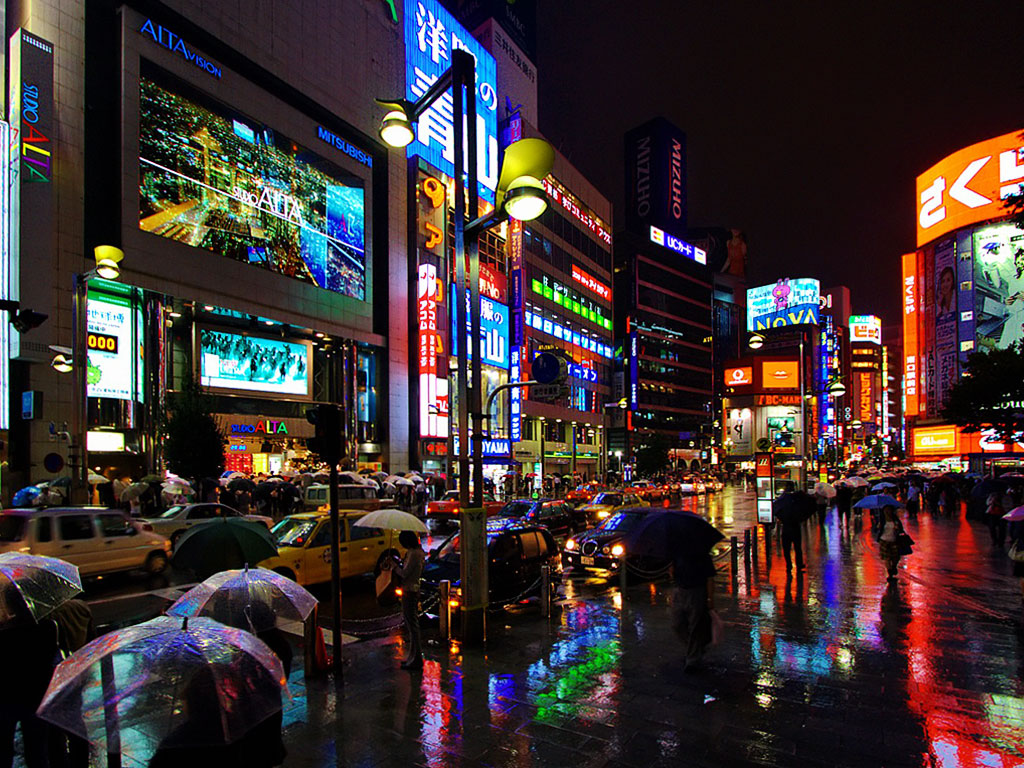
When I was five my imagination of Tokyo was only limited to buildings being busted by Ultraman when he accidentally sat on them while having his usual evening fight with dinosaur-like creatures. When I finally step foot on the city itself 20 years later, I realize that Tokyo is a lot more than that. It is a hectic, neon-lit megalopolis with out of the world street crowds. It's a city that has full ability to overload your senses with sights and sounds. It is a city where people move fast all the time. Crazy as it seems, Tokyo is remarkably safe and reliable where everything runs on.the.dot. With tons to offer fans of design, anime, technology art or culture alike, it is impossible for someone to discover even half of Tokyo in a day. But that is what me and my friend tried to do anyway (and failed miserably). However did cover a lot of the highlights around Tokyo. Let me tell you about our whole day journey
Neon-clad Shinjuku at night
We first went to Ueno Park. We didn't really plan to go there, but we had to activate our Japanese Railway Pass (a pass that allows us to use the trains as we like for 5 whole days!) at the Ueno Station, and we passed by the park that looked inviting. So we just went in and learned that it is one of the oldest parks in Tokyo and has a lot of museums in it: Orient Museum, the Shitamachi Museum, the Tokyo National Museum and the National Science Museum, to name a few. There are statues scattered throughout the park as well, but I liked this one the most:
Trying my level best to imitate this Thinker
This is where I am supposed to disappear into the mist
 I remembered that my SSM research supervisor, Prof Shamsul told us that there used to be Pandas in the park zoo, but too bad the last one died a couple of years ago. We had a good walk around the park. It was still early morning, so we went to a Starbucks for a quick pick-me-up and studied the subway map before continuing our journey whole day journey around Tokyo
Nice exteriors!
Studying the subway map with the aid of glasses and caffeine
So after getting relatively smarter about the subway maps, we hopped on to the subway and head towards Akihabara, Tokyo's 'Electric Town' crazy Otakus back in my hometown are dying to go to, and for a good reason too. It is a heaven for them with hundreds of stores specializing in everything related to anime, manga, video games, figurines, and card games. One of the recently popular attraction around here is the 'maid cafe' where the waitresses dress up and act like maids in animes. Here's an example of one who's too shy to be taken picture of, or maybe she's scared her mom would read my blog and ask what the heck is my daughter there: 
''Oh dang, I should be in school''
For those who has no idea what Otaku is and cannot name even more than 3 anime characters, don't fret. Akihabara also offers a wide range of electronic items, which is actually why it got the name 'Electric Town' anyway. They offer everything from the newest computers, cameras, televisions, mobile phones, electronics parts and home appliances to second-hand goods and electronic junk. 
Young and old people come to buy electronic stuff
After Akihabara, Electronic Town, we went to Nippori, Textile Town. My friend had a lot of Japanese cotton to buy for his family. Compared to Akihabara, Nippori is relatively quiet. People don't buy textiles on weekends I guess. As boys, we had no idea which cottons are good, which are not, which are beautiful, which are downright ugly, so we just selected some random ones and moved on to our next destination: Shinjuku
At one of the crossroads in Shinjuku
Shinjuku was a place so convoluted with people. Even the streets are closed for cars to let people walk. It houses one of the busiest train station in the world, which explains the crowd. There's an enormous shopping centre in Shinjuku, the Times Square. If you think that Kinokuniya in Kuala Lumpur is big enough, you have seen nothing yet. The Times Square is connected to a Kinokuniya bookstore which has 7 floors! Yep, 7 floors full of books. My kind of place! Too bad I we could not spend too much time in Kinokuniya because there is a lot more of Tokyo we have to see. I will continue my Tokyo journey in my next post. Coming up: Meiji-Jingu, Harajuku, Shibuya and Yokohama. Till then! ;)
Bookstore with 7 floors. How cool is that?
The bridge that links the Times Square to Kinokuniya


Popular Posts